
Moving into the new era of love and relationships
Updated: Nov 17, 2025
#loveanddeepspace #otomegames #parasocialrelationships #love #virtual #real #reel #cnalifestylewomen
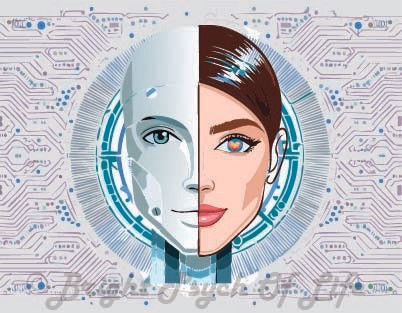
With the increased technological proliferation in today’s society, the traditional conventions of love and relationships seem to have evolved to include concepts such as virtual love and relationships.
I was recently invited to give my inputs to CNA lifestyle (Women column) on the growing popularity of online 3-D otome games and virtual relationships. The term “otome” itself means “maiden” in Japanese, reflecting the games’ focus on romance-based storylines from a female protagonist’s perspective. One such game, which has been gaining huge popularity all over the world including Singapore, is the “Love And Deepspace”. As with most otome games, females are typically the target audience. Players can interact with game characters and game play in order to influence trajectory of storylines or outcomes with the characters. The extent, by which players have gone, ranges from spending thousands on in-game purchases to hosting celebrations for their favourite game characters in actual real-world cafes.
Parasocial relationships and interactions
Parasocial interaction refers to the one-way interpersonal relationships that users establish through the use of media with either real people or fictional characters in the media (de Bérail et al., 2019). This concept is not a new concept and has been around since 1956. Traditionally, such parasocial relationships were most evident in fandoms for celebrities from television shows and movies. With the presence of social media, streaming media and online games, such relationships are no longer confined to traditional fandoms. Individuals can even form parasocial relationships with public figures (e.g., politicians, athletes), influencer or favourite game character in the respective platforms.
Potential benefits
In otome games, players get to interact with game characters whenever they want, literally with a tap of a game application (app). The ease by which players gain access to the characters can offer them instant gratification to their needs for emotional and social support. Such instant gratification is not realistically possible in traditional parasocial relationship with celebrities or real-life relationships.
Parasocial relationships developed in games can provide players with a sense of companionship and social connectedness. As game players’ choices can influence trajectory of game play in the virtual world, this fosters their sense of autonomy as well as boost their sense of adequacy, self-confidence and esteem. Games can also be seen as a relatively controlled platforms for individuals to practise social skills or scripts necessary for forming relationships. This can help people gain confidence in socialising.
Given how game characters’ responses tend to be customised based on players’ needs (due to artificial intelligence), the interactions in the game can potentially elicit real favourable feelings in players, thus leaving them feeling supported by the characters.
Such online games, given how immersive it can be with interactive storylines and game objectives to meet, can be seen as an outlet for individuals to effectively serve as a temporary respite from real-life stressors.
While female players are playing the otome games, their interactions with male game characters may influence some of their gender stereotypes (regarding dating and relationships) as well as their perceptions about themselves and about masculinity. They may also form preferences about their ideal partner characteristics. Through this immersive and feedback-informed process in virtual world, they can gain more knowledge about themselves which can support their decision, be they related to matters of heart, love as well as social and romantic relationships.
Potential concerns/risks
As one engages intensely in parasocial relationships in the virtual domain, one may observe a corresponding trade-off in one’s capacity and resources for real-life commitments and interactions (such as social life, interest/hobbies). With lesser time to spend for them, one may feel less competent engaging in these real-life activities, which in turn maintains their engagement in virtual world.
As one gets increasingly preoccupied in the virtual domain, individuals can struggle with boundaries between real and virtual life, and in some cases, lose track of time in the game and neglect their real-life occupational and social responsibilities. These can have real implications on their own lives as well as lives of their loved ones in real world.
Interpersonally, due to one's experience with game interactions with characters, one may develop unrealistic expectation of social interactions. For example, one may expect partners to be emotionally available all the time and/or that one can use money to obtain desired outcomes, like in virtual world. There may also be expectation for interactions to be void of conflicts and disagreements. These unrealistic expectations can give rise to reduced satisfaction with real life relationships and breed resentment towards partners.
Virtual relationships can lack the “human touch” in form of non-verbal expressions, human compassion and empathy as well as physical touch (e.g., cuddling, hug) that are essential in facilitating emotional bond and social connection in relationships. Hence, if one was over-reliant on virtual relationships as main source of connection, one may feel unfulfilled in this regard.
Coping with this new era
The new era of virtual love and parasocial relationships are here to stay, given the continued technological advancements, as well as the above mentioned benefits.
I foresee that game creators may continue creating virtual worlds even more realistic than it already is at present and along with the increased realism in character design, this can potentially make it more challenging for players to differentiate between the virtual world and reality.
We can focus on what is within our control. We need to recognise the benefits and drawbacks of over-indulgence in such games and parasocial interactions. We also want to build our ability to differentiate between real and virtual relationships as well as decide how much resources we invest on both real and virtual worlds.
Essentially, we recognise the need for moderation in the extent we engage in games and virtual world. While we acknowledge the benefits that healthy engagements with games can have on individuals (e.g., enjoyment, stress relief, self reflection) and can choose to engage for these purposes, we want to monitor the extent of engagement. For this, we may ask ourselves, “How many hours are you playing the game or interacting with your virtual love interest in a day?”; “Do we have time for real life commitments or other hobby?”. Your answers may provide a gauge to the extent of our engagement with virtual world. In cases where individuals feel that virtual engagements are at an unhealthy level where there is adverse implications on one's real life commitments, we may consider setting boundaries (in terms of time duration and budget for game play for example). Presence of an accountability person can be helpful in this endeavour too. If you require some help in managing this real-virtual life boundary and ensuring a healthy balance, do reach out for support from mental health professionals.
Lastly, I would like to leave you with a gentle reminder. Virtual connections can be enriching and supportive to an extent, but they are missing the physical contact and full depth of emotional and social experiences associated to real-life relationships. Real life interactions are characterised by human bodily touch, along with all the nuances related to real time feedback of verbal expressions and non verbal cues, which creates a conducive environment for deeper connection, love and understanding.
No matter how engaging and authentic the virtual world can seem, it is important to set some boundaries and be mindful to prioritise resources for real-life commitments and connections. For it is in the real world where our human needs can be fulfilled in a more comprehensive and multi-dimensional way that no virtual interactions can fully meet.
If you resonate with this above post, please leave something in the comments. Would love to connect with you whether it is virtually or in-person! Otherwise, do share this with one other person who can benefit from this.
If you are keen to read about CNA lifestyle (women)'s article on phenomenon of otome games and virtual relationships, here it is: https://cnalifestyle.channelnewsasia.com/women/love-deepspace-mobile-game-marriage-virtual-love-463691
Cheers,
Jeanice
--------******--------******--------*****
References
de Bérail, P., Guillon, M., & Bungener, C. (2019). The relations between YouTube addiction, social anxiety and parasocial relationships with YouTubers: A moderated-mediation model based on a cognitive-behavioral framework, Computers in Human Behavior, 99,190-204.


Comments