
Psychology underlying Halloween
Updated: Nov 17, 2025
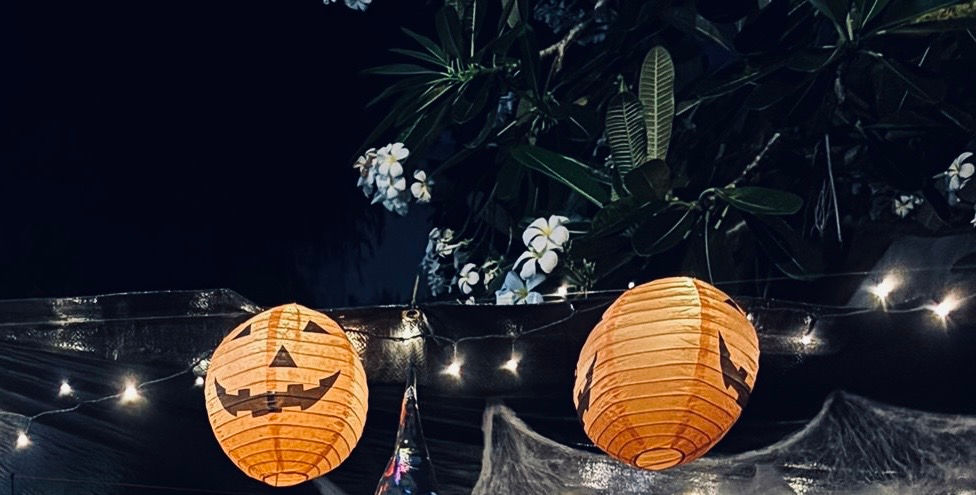
The following paragraphs discuss the psychology concepts and mechanisms underlying Halloween.
INCREASED FAMILY BONDING
For some individuals who attend halloween events as a group/family, it can certainly be a chance for the group to bond given the shared experiences of fun, enjoyment and fear (of the unknown). Recent research has found many benefits that leisure has on families. These benefits include better communication skills (Huff, Widmer, McCoy & Hill, 2003) and problem solving efficacy (Wells, Widmer, & McCoy, 2004), satisfaction with family life (Zabriskie & McCormick, 2003), and other positive outcomes in family interaction and stability (Driver, Brown, & Peterson, 1991).
FEAR AND COPING *
Halloween is related to themes of the unknown, and of death, after-life and monsters and can most certainly elicit feelings of fear, anxieties, and distress among individuals.
In light of these, it presents an opportunity for party-goers to confront these fears in company of family/peers (social support) and to practise the strategies for distress regulation/coping. Halloween is a chance for us to confront and cope with the distress associated to not only the common halloween themes (of gore, haunted houses or ghouls) but also the idea of approaching a stranger’s house for trick-and-treating. This way, we are essentially using the event as a platform to confront our fears and practise skills, with eventual aim to live a life beyond the clutches of fears.
Through the social nature of the event, one can also realise that the fear is not unique to an individual but instead, it is a common vulnerability that we have as human beings — in reference to fear towards death, darkness, unknowns etc. This in itself can serve to validate and normalise the fear for some.
PLAY AND ITS BENEFITS
Participation in Halloween activities e.g., trick or treating while being donned in costumes and make-up is an example of pretend and imaginative play.
Such play can be beneficial to child development in terms of social skills and emotional well-being. For instance, Hirsh-Pasek, Golinkoff, Berk, & Singer (2009) suggest that make-believe games are forerunners of capacity for self regulation (which includes reduced aggression, delayed gratification, civility and empathy). And according to Hughes (1999), role playing can also allow children the opportunity to learn social skills like communication, problem-solving, and empathy.
As Stuart Brown highlighted, “When we play, we are engaged in the purest expression of our humanity, the truest expression of our individuality. Is it any wonder that often the times we feel most alive, those that make up our best memories, are moments of play?”
Relatedly, dressing up in Halloween costumes of one’s choice can be a showcase of individuality and uniqueness. And the fact that what may seem bizarre and out of this world can potentially be acceptable in the context of halloween celebrations can lead to reinforcement of such individuality and creativity.
And the above can apply to both kids and adults, alike.
RELEVANT SOCIAL PROCESSES
The make-up, masks and costumes can provide a sense of anonymity which, in accordance to deindividuation theory, can lead to loss of individual’s identity and self-awareness. This may result in a reduced adherence to social norms and an increased likelihood to engage in behaviours that may typically be inhibited (due to it being socially less acceptable). For instance, this, in the context of Halloween trick-or-treating, may mean consumption of more alcohol or behaving in more aggressive manners.
The social identity model of deindividuation effects suggest anonymity does not simply reduce self-awareness, but also increases the salience of group identification. Thus, this results in stronger adherence to group norms which can result in pro-social or anti-social behaviours depending on the group and context.
VARIABLE EMOTIONAL RESPONSES TO HALLOWEEN
In light that any given event/festival can elicit varied responses from various segments of society, halloween, which is commonly characterised by themes of supernatural, gore and goth, is no exception ! Various parts of society, depending on their value systems, beliefs and history, may become triggered by Halloween and its representation, whereas others may enjoy or indulge in it with the spirit of fun and playfulness.
Specifically, there are those who are affected by the associations to death. For instance, those grieving losses and deaths of loved ones and who somehow felt that the halloween festivities interfere with their grieving process and prefer not to be involved in halloween activities.
There are also those who hold unfavourable associations or beliefs about halloween and its related activities and hence, avoid participation given its perceived misalignment with their religious and personal belief/value systems.
Likewise, there may be individuals who have had negative and/or traumatic experiences or memories related to Halloween - for instance, those who had lost loved ones to the festivities and related events may inevitably feel more triggered than not, when exposed to related cues of Halloween.
The above explores how immersing in Halloween celebrations can potentially enhance social bonding (among family and peers), promote prosocial behaviours on a group level, validate one’s experience of fear as a common vulnerability as well as improve socio-emotional well-being and development. However, there are factors to be mindful of when engaging in activities of Halloween. For one, we need to be sensitive and respectful of the segments of society that are more vulnerable and negatively affected by the idea and representation of Halloween. After all, we all lead our individual lives in accordance to our beliefs, values and preferences in consideration of what’s best for our mental health. Given that violence and aggression can occur during such events due to the social processes (e.g., deindividuation) as discussed above, I would like to state my intolerance towards violence and aggression during halloween activities. In fact I would like to emphasise that we, with greater knowledge and capacity to change, get to choose the lens we would like to view halloween through and the spirit by which we celebrate it from now onwards.
Lastly, for caregivers intending to bring their children for Halloween related activities (or any form of new or unfamiliar activity, really), do take note of the following.
Before the activity:
Do prepare them for what’s to be expected. It may be necessary for caregivers to get ready relevant information from event organiser and/or based on past experiences of attending such events. This is to provide kids with a mental preparation as to what to expect in order to feel adequately prepared for the event. For instance, they can also be guided on what's appropriate to do /say when approaching a house for trick-or treating. And kids can also be given the option to end the activity prematurely anytime they need to - and how the kid can convey this to caregivers can be discussed beforehand too. And if your child do not wish to participate and requested to sit out of the activity, do validate their concern and respect his/her decision. In fact, you can stay out of it with them and be mindful not to put them down because of their fear /concern. Instead, we can gently inform them that they can always try it another time.
During the activity:
Do accompany them on the activities, whenever possible - as this can create sense of safety (both emotional and physical) and provide a platform for social learning through modelling. For instance, caregivers can model for the kids what might be socially appropriate way of greetings and/or pro-social behaviours to engage in. Additionally, caregivers can accompany the kids to help co-regulate with them throughout the experience if the need arises. Your presence is helpful as there can potentially be so many valuable teachable moments.
After the activity:
Do provide a space and time for a brief check-in whereby kids and caregivers alike can discuss their individual experiences. Through this check-in, caregivers can observe if there is any aspects that are enjoyable and/or concerning which may require more in-depth exploration. This can also enhance mutual understanding and closeness between caregiver and child.
I look forward to any comments or views you may have about the Halloween and its related concepts - please type away!
As always, i'll be rooting for you!
Jeanice
+-+-+-
*Important note: For individuals who notice that the experience of fear persists beyond the event and that it affects their daily functioning, you may seek consultation with mental health professionals. This is because a systematic treatment plan will be needed to treat clinical diagnoses of anxiety disorders (e.g., specific phobia, panic disorder).
References:
Brown, S. L., & Vaughan, C. C. (2009). Play: how it shapes the brain, opens the imagination, and invigorates the soul. New York, Avery.
Driver, B. L., Brown, P., & Peterson, G. (Eds.), (1991). Benefits of leisure. State College,
PA: Venture Publishing.
Huff, C., Widmer, M., McCoy, K., & Hill, B. (2003). The influence of challenging
outdoor recreation on parent-adolescent communication. Therapeutic Recreation
Journal, 37(1), 18-37.
Wells, M. S., Widmer M. A., & McCoy, J. K. (2004) Grubs and grasshoppers: Challenge- based recreation and the collective efficacy of families with at-risk youth. Family Relations, 53(3), 326-333.
Zabriskie, R. B., & McCormick, B. P. (2003). Parent and child perspectives of family leisure involvement and satisfaction with family life. Journal of Leisure Research, 35(2), 163-18


Comments