
Are you an influencer ? - Part 2/2
Updated: Nov 17, 2025
#influencethroughconnection #connectionbeforecorrection #socialmedia #stepup #showup #childdevelopment #sparksofideas #brightpsychoflife #bpol #therapy #support #psychotherapy #psychologist #clinicalpsychologist
World Health Organization (WHO) defines adolescents as any person between ages 10 and 19. Adolescence is often described as a transitional period between childhood and adulthood. There is a multitude of changes faced by young people during this period that makes adolescence a rather turbulent season. The developmental needs of these young people become increasingly complex over time, and parents feel they are expected to be on top of things all the time. This is especially so in today's context when they are bombarded by "picture-perfect" highlights of other parent-child relationships in social media as well as influx of parenting information from the internet. As a result, parents feel overwhelmed, demoralised and uncertain as to how to manage this parenting journey on top of work commitments and caregiving responsibilities to their own elderly parents.
As a psychologist (who is also a parent), I can relate to the above experiences, and hence it inspires me to consolidate what I learnt and found helpful in my course of work and parenting.
In this entry, I will be discussing how we parents/caregivers can work on the relationship with our children and eventually become influencers to these young people as they grow, change and get increasingly exposed to external influences in the internet, and society.
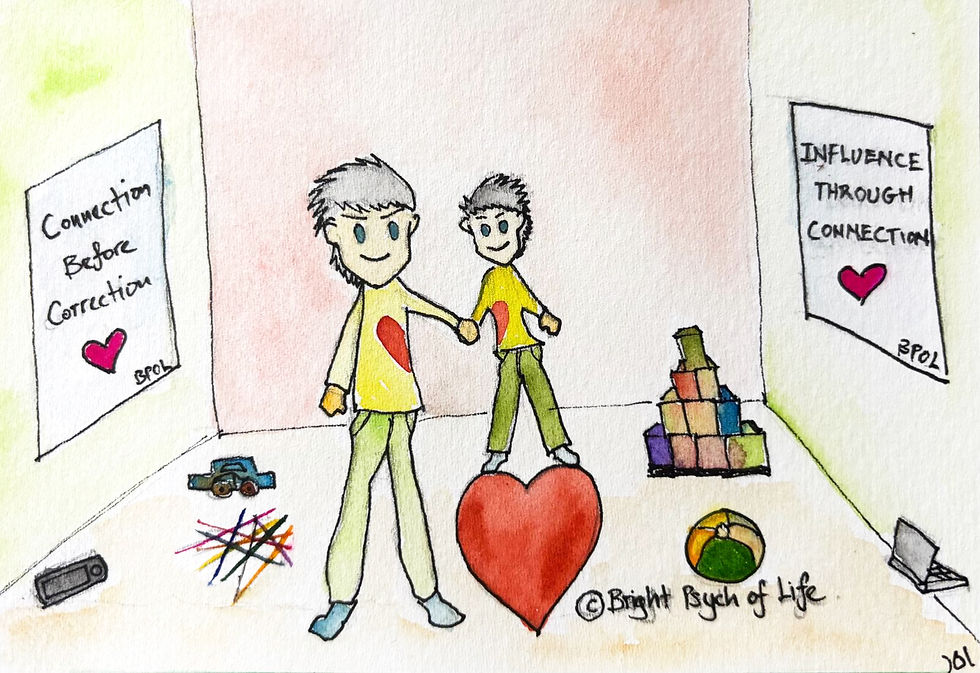
Factors below are crucial in setting the foundation and creating conditions conducive for parents/caregivers to be able to influence the younger people under their care.
We want to understand the period of development that the child is in and its associated developmental needs and growth– in various aspects e.g., physical, cognitive, psychosocial and emotional. In the case of adolescence, development needs include the search for one’s personal and social identities, experience of puberty-related growth spurts, as well as the oscillation between autonomy and intimacy needs.
We observe in our young people this dance between autonomy/space and closeness/intimacy. They tend to separate from their parents or caregivers, while at times, stay close to parents due to reliance on them for basic needs and resources. It can appear conflicting to others, but these youths are trying to balance the needs of the season. Understanding what the period is like for them can offer parents additional perspectives and empathy. Parents can better able put themselves in their children’s shoes, and hence, respond with more kindness, love and compassion.
For parents, parenting journey can trigger many unresolved or suppressed emotions (such as anger, frustration, uncertainty, helplessness, fear and shame) from long ago. When these emotions remain unaddressed, they do not just miraculously disappear. Instead, they stay and affect us in ways we do not imagine. It can manifest either in terms of emotional outbursts at our children or in our body as part of physical ailments (due to mind-body mechanisms). Check out previous post on emotions: https://www.brightpsychoflife.com.sg/post/let-s-tune-in-to-our-emotions
Hence, it is essential that we, parents, learn to self- soothe or regulate first.
Since infancy, parents are often the ones whom infants rely on for support for emotional regulation. Such co-regulation is part of development. Our children, in the face of all the emotional upheavals in adolescence, require a calm and responsive presence to model emotional regulation strategies to support them in restoring their own calm. In short, parents, who are themselves regulated, can be the calm (or grounding presence) in their child’s “storms”. Over time, and with practice, the young person eventually develops their own set of self-regulation skills, which helps them cope with life’s emotional upheavals more confidently and independently. This can be essential skills that will serve them in long run.
As and when additional support is required, parents may decide to seek out appropriate help either for themselves or their children in order to build their emotional regulation and coping resources. Such help-seeking behaviours can also show their children that everyone deserves support and that it is okay to seek professional help if needed.
Adolescence can be a period of experimentation for youths and one in which risky behaviours (e.g., drinking alcohol, drug abuse) may be relatively more common than in other age periods. Instead of being deterred by this delicate dance with the youths, parents can choose to tune in and provide space or intimacy in accordance to their needs in the moment. In those instances of intimacy, we seek to focus our conversations and attention on the children and their points of view. For instance, while we are interested in THEIR opinions on current affairs, we may also want to include OUR takes on relevant matters so they know our stand and boundaries too.
This poignant quote points to the why responsive listening in parenting is essential.
“Listen earnestly to anything your children want to tell you, no matter what. If you don't listen eagerly to the little stuff when they are little, they won't tell you the big stuff when they are big, because to them all of it has always been big stuff.”
Catherine M. Wallace
We seek to not just listen to their opinions or preferences, but to also be willing to incorporate them in some of our shared family decisions e.g., trip itinerary and meals. This can reinforce the message that their opinions are valued and respected and this in turn can reinforce further sharing, and mutual understanding, which builds the parent-child bond.
Children learn by modeling what their parents do, not say. It is essential to be mindful about modelling favourable behaviours that you wish your child can emulate or copy for themselves. For instance, you model for them how you choose to speak kindly to yourself. This can eventually influence your child’s behaviours and decisions.
As parents, we also strive to be their greatest advocate. How significant others speak to them tend to become their inner voices. So, if we choose to speak lovingly and/or in a strength-based manner about/to them, these become their self-narratives and perceptions.
Relatedly, we want to use growth mindset philosophies in our interactions with our youth – such as, highlighting their capacity for growth, progress, and future success following a mistake. These can go on and influence them in how they perceive and/or deal with lapses.
The key is also in showing up for our children, as consistently as possible, even in light of our competing commitments. For instance, we want to make time to attend our children’s soccer matches as this can mean the world to them.
Even during parent-child conflicts, parents can choose to prioritise love and connection with their children. This can demonstrate that the child is loved despite disagreements. There can be parental efforts to mend the rupture and/or to discuss insights from conflict/mistakes with children in a separate seating (e.g., when both are calmer). These, when calmly handled, can build sense of safety and trust in the relationship, making children more willing to approach parents for support when faced with difficult situations. The youths eventually develop trust in their parents’ capacity to adequately support them, be it during calm or turbulent times, or anything in between.
All in all, Influence is less about control (which tends to perpetuate the control-rebel cycle) and fear-based approaches (e.g., punishment), but it is more about connection and attunement to your child’s developmental needs of the season. Parents who try to control too much ironically end up controlling very little, if at all. Instead, we consider engaging in the above factors, to create a parent-child bond (foundation) that is conducive for us to be their influencers.
Essentially, in this critical age of development, we want to help young people feel adequately regulated, validated, accepted for who they are/want to be, loved and safe, and understood. These can facilitate our children to gravitate towards you, when faced with difficult topics (e.g., about mistakes, dilemmas). They seek you out, in challenging times, when they need sounding board (practical advice) and/or safe harbour (for comfort). Ultimately, it is about influencing their decisions and actions which can have long-term impact on life outcomes and well-being.
If you need more inspiration on engaging your youth on play or simply, playful ideas to bond with them, do check this out: https://www.brightpsychoflife.com.sg/post/seize-your-play-moment-today
If you are facing difficulty in implementing the above with your child, or simply needing assistance in the parenting journey, please feel free to reach out to me for support.
If you have benefitted from this blog, do help to share with others who may need it. After all, sharing is caring!
In the meantime, I wish you and your children well and may you be the influencer in their lives for as long as they need you!
Rooting for you always,
Jeanice
--
References
Carnegie, D. (1981). How to Win Friends and Influence People. Dale Carneige & Associates, Inc.
Nichols, M. P. (2004). Stop Arguing with your kids: How to win the battle of wills by making your children feel heard. Guilford.
Papalia, D. e., Olds, S. W., & Feldman, R. D. (2003). Human Development, McGraw-Hill.


Comments